What are the essential travel documents required for a trip to China?
As a British citizen visiting China, you'll need a valid
passport with an expiry date of more than six months from your
arrival date. Additionally, you will need a visa to visit mainland
China. The visa requirements for Hong Kong differ. It is
recommended that you check with the Chinese embassy or consulate
before your trip.
What time zone is China?
China's time zone is called China Standard Time and is
UTC+8.
Will I need a converter or adaptor for electricity?
Make sure you pack a power adaptor that works with Type A and I
outlets for your time in China. Typically, 220V, 50hz AC
electricity is used nationwide; however, some hotels in major
cities offer 110V and 220V outlets.
What is the local currency in China, and how can I access money during my trip?
The official currency of China is the Renminbi (RMB), issued by
the People's Bank of China. You will often see prices in the
Chinese Yuan (CNY), which is a denomination of the Renminbi.
Thinking of it in terms of pounds sterling, Renminbi = Sterling,
Yuan = Pound.
While you can exchange your money at a bank on arrival, the
easiest way to obtain your Yuan is at an ATM. Keep in mind that
foreign ATM fees may apply, so plan accordingly to maximize your
transactions. You can exchange any leftover Yuan for GPB or USD
when you depart, though exchange fees do apply.
You can also use a credit card in China - but typically only in
large cities. The technology is expanding, but cash is still
preferred in many areas. Notify your credit card company before
travelling and ask about any foreign transaction fees.
When is the best time to visit China?
China is a year-round destination with appeals spanning all
seasons; however, spring and autumn travel comes with significant
benefits. These are times of year when the weather is mild - and
typically dry - for comfortable explorations. Traveling in spring
allows you to see the fruit trees and gardens as they begin to
blossom to life, whereas autumn's colors add a cosy complement to
the nation's ancient sites. Keep in mind that because China is such
a vast nation with six climate zones, temperatures and conditions
can vary from one region to the next.
Is it necessary to learn Mandarin Chinese before visiting?
Learning basic Mandarin Chinese phrases can assist you with your
travels. You may encounter English speakers in tourist destinations
and large cities, but it is not commonly spoken in China. While
having a language translation app is an invaluable tool, the
following are a few phrases to get you started:
- Nǐ hǎo - hello Zàijiàn - goodbye
- Qǐngwèn - excuse me (to get attention)
- Wǒ bù dǒng - I don't understand
- … zài nǎlǐ? - Where is?
- Xǐshǒujiān zài nǎlǐ? - Where is the bathroom?
- Fàndiàn - hotel
What is the transportation system like in China?
China's urban centres feature expansive and efficient public
transportation options, including buses, high-speed trains and
Metro rail service. These trains connect up to 47 cities and travel
at speeds of 160km/h, while the high-speed bullet trains can reach
up to 350 km/h.
Is China safe for tourists?
China is generally considered safe for tourists, both in the
countryside and in major cities. However, it's always advisable to
take standard precautions, be aware of your surroundings, and leave
any valuables in your hotel's safe when one is available.
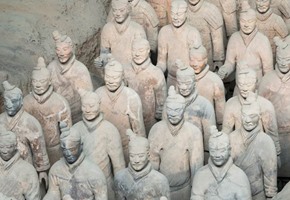
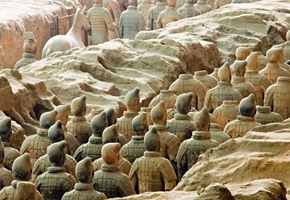
What are the must-visit attractions in China?
From ancient attractions to incredible cities, China's offerings
are as diverse as the nation itself. Soak up history while visiting
the Great Wall of China, Beijing's Forbidden City and the
Terracotta Army in Xi'an. Explore the nation's unique wildlife at
Chengdu's research centre, or find yourself wrapped in timeless
culture and nature's beauty while following the Yangtze river.
What is the tipping etiquette in China?
Tipping is not a common practice in China and may even be
considered rude or embarrassing. That said, tipping tour guides and
vehicle drivers is encouraged - and often expected - so keep a
small amount of cash on you for these purposes.
Are there any cultural customs or taboos I should be aware of in China?
Do - Greet locals with a gentle handshake (too
firm is considered aggressive) and a nod rather than a bow
Do - Tour temples and monasteries in a
clockwise fashion
Do - Remove your hat before entering a
religious establishment
Do - Join in on toasts at restaurants
Don't - Engage in physical contact like hugging
upon meeting someone; it can make the Chinese uncomfortable
Don't - Tap your bowl with your chopsticks or
place them upright in your bowl
Don't - Use your personal spoon or chopsticks
when sharing a dish
Don't - Photograph Chinese citizens -
especially elders - without permission, and be prepared to pay for
their picture
How is the food in China? Are there any vegetarian/vegan options?
Chinese cuisine is incredibly diverse and varies by region, yet
universally uses fresh, local ingredients. You will not find many
frozen or canned ingredients; likewise, you will not find raw or
uncooked components. The main staples of Chinese cuisine are meats,
vegetables, fruits and grains with very little dairy. Rice and
noodle dishes are staples.
While you may be able to find vegan options in major cities,
they are less common in smaller towns and villages. Vegetarian
diets are easier to accommodate; however, some restaurants will
still include eggs or fish, so be sure to ask about the ingredients
if there is any concern.
Is the water in China safe to drink?
The water in China is not safe to drink, and it is recommended
that you drink only from sealed bottles purchased from a market,
restaurant or your hotel. Further, it is wise to brush your teeth
with bottled water. The water used for tea is boiled and is
generally considered safe for consumption.
What is the toilet situation?
In many places throughout China - especially outside of major
cities and tourist attractions - the facilities are traditional
squat toilets. Your Tour Manager and local guide will make an
effort to find Western toilets when they are available.
How many people go on one of your holidays?
Great Rail Journeys is a market leader when it comes to small
group tours. We're proud of being pioneers in our approach to group
sizes and have become the leading operator for escorted holidays.
Our group sizes vary between tours, but are our ranges are usually
a good indicator of what to expect.
For our Discoveries range, you'll be in groups with an average
of 30-35 travellers and a maximum of 40. If opting for our Classic
collection, you'll be in groups with an average of 20-25 travellers
and a maximum of 30*. Our Landmark holidays are where you'll find
our smallest group sizes, starting from as low as 16 travellers and
an average of 22, to a maximum of 30.
*Scandinavian and Worldwide tours are on average 30-35 and a
maximum of 40.
Why travel to China with Great Rail Journeys?
Combining excellent value for money with an itinerary of
exciting excursions that capture the essence of this captivating
country, an escorted tour of China with Great Rail Journeys offers
an unforgettable introduction to the 'Land of the Dragon'. We make
your adventure in China as enjoyable and worry-free as possible.
The cost of your rail holiday includes all flights and other travel
costs, hotel accommodation and a generous selection of meals, a
programme of sightseeing tours, excursions and activities and the
services of our professional and knowledgeable Tour Manager
throughout your visit.
As relaxing in good accommodation is an important aspect of your
train holiday in China we take care to choose those hotels which
score highly for the convenience of their location and the quality
of service and guest facilities they provide. On many occasions
we'll pick reputable family-run hotels for the additional value,
service and informal atmosphere they offer.



 Classic







 (49 reviews)